
The Eve of St. Agnes Outlined and Analyzed
Saturday, September 12, 2026 | 6:59 PM (posted)
Using Gemini AI for assistance, I have developed the following analysis of one of John Keats’s stellar works of art, The Eve of St. Agnes. He wrote it in 1819, not long before his death in early 1821, from consumption.
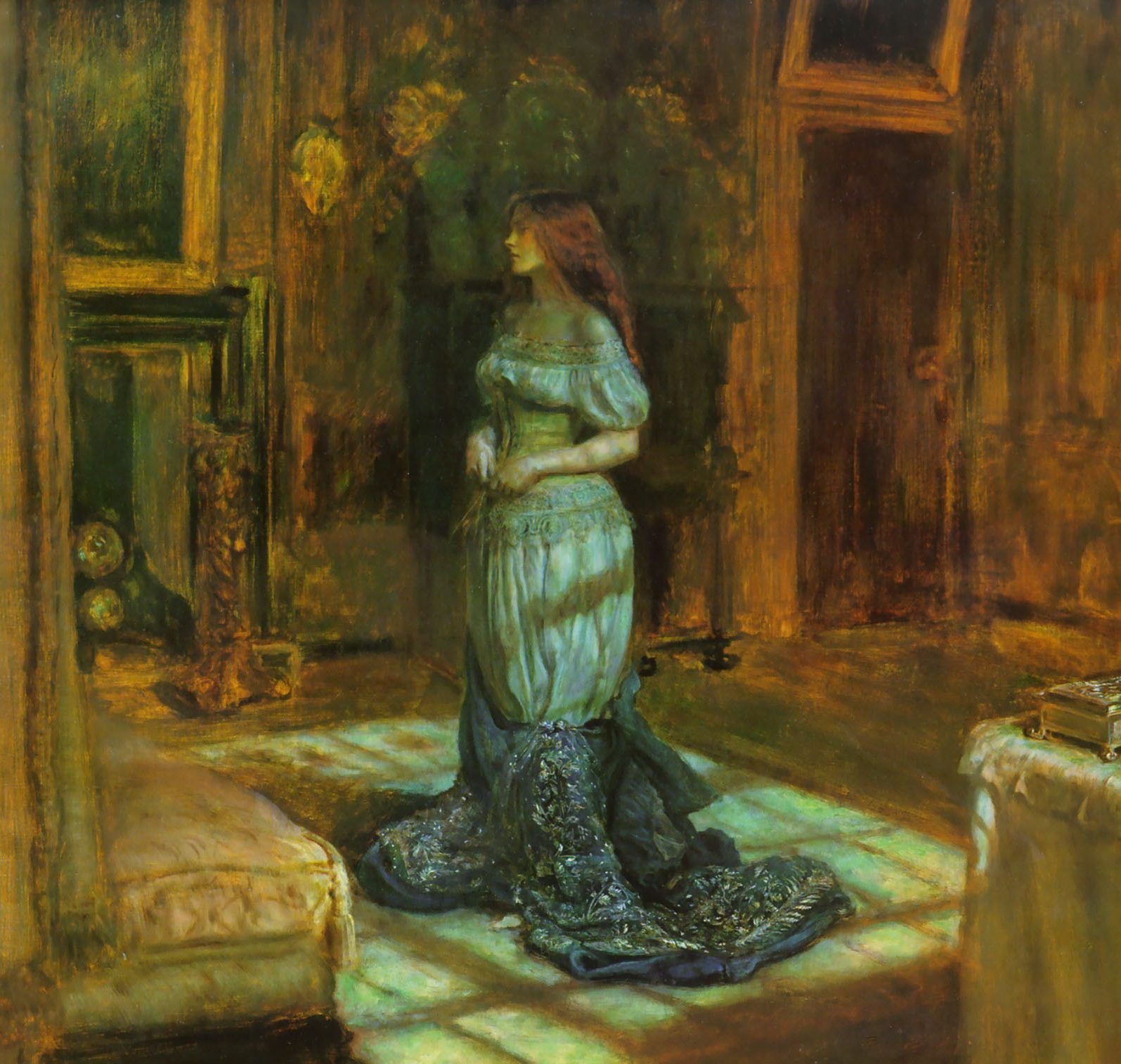
The Eve of St. Agnes operates far more like a series of sensory, impressionistic oil paintings than a plot-driven drama. The narrative spine is intentionally minimal, a classic Romeo-and-Juliet setup—but the plot is essentially a vehicle for Keats to contrast extreme states of being: freezing cold vs. burning warmth, ascetic devotion vs. sensual indulgence, and waking reality vs. enchanted dreams.
Because Keats lingers so deeply on textures, colors, and sounds, the poem gains that Shakespearean “staying power.” It doesn’t get old because you aren’t reading to find out what happens next; you are reading to re-experience the atmosphere.
Structurally, the poem consists of 42 Spenserian stanzas (totaling 378 lines). When mapped out visually by shifts in focus, action, and setting, it breaks down into 14 distinct scenes.
Here is the scene-by-scene outline of the poem:
The Scene-by-Scene Outline
- Scene 1 – It is a cold winter night, and just outside the castle’s main entrance, an old man (the Beadsman) prays to his rosary, and an owl looks on and a rabbit hops by, both chilled to the bone.
- Scene 2 – The old man stands up, carries his lantern, and walks down the chapel aisle past catacomb walls where full knight’s armor stands at freezing attention.
- Scene 3 – Moving toward the interior of the castle, the Beadsman hears the faint, warm prelude of party music, but he turns away to sit awake in the cold, rough ashes to grieve for sinners.
- Scene 4 – The camera shifts to the great, glowing banquet hall where silver trumpets blare, carved angels stare from the cornices, and a mass of a thousand wealthy, brightly dressed revelers bursts into the room.
- Scene 5 – Amidst the loud party, we focus on Madeline. She moves through the crowd with vague, detached eyes, ignoring the amorous attention of various young knights because her heart is entirely focused on the old legends of St. Agnes’ Eve.
Plot Point / Conflict: Madeline’s internal fixation disconnects her from her surroundings. She ignores the men around her because she has resolved to perform the St. Agnes ritual: retiring to bed fast, supperless, looking only upward, to receive a vision of her true love in her sleep.
- Scene 6 – The scene shifts abruptly outside to the moonlit castle gates, where young Porphyro has traveled across the moors. He hides in the shadows of the portal doors, praying for a glimpse of Madeline.
Plot Point / Conflict: Porphyro enters the castle, braving immense danger. His family is in a deadly blood feud with Madeline’s kin; the lords inside are described as “barbarian hordes” and “hyena foemen” who would murder him on sight if discovered.
- Scene 7 – In a dim, quiet hallway, Porphyro encounters Angela, an old, palsy-stricken dame who is loyal to his family. Startled and terrified for his life, she ushers him into a hidden, moonlit chamber to keep him out of sight.
- Scene 8 – Inside the hiding spot, Angela feebly laughs when Porphyro explains why he is there, telling him that Madeline is playing the “conjuror” tonight to see her future love.
Plot Point / Conflict: Hearing this, a sudden, brilliant idea strikes Porphyro. He convinces a reluctant, weeping Angela to help him sneak into Madeline’s bedchamber so he can hide in her closet and be there when she wakes. Angela is horrified by the potential impropriety but relents when Porphyro swears he has honorable intentions and will not harm Madeline.
- Scene 9 – Angela hobbles through the dark, winding galleries of the castle, leading a tense Porphyro to Madeline’s silken, quiet bedroom. She hides him in a carved, safe closet, gives him a collection of rare, sweet delicacies she gathered, and leaves.
- Scene 10 – Madeline enters her room, her candle blowing out in the draft. Bathed in the spectacular, multicolored moonlight filtering through her stained-glass window, she undresses in total silence, slips into bed, and immediately falls into a deep, spellbound sleep.
- Scene 11 – Porphyro creeps silently out of the closet into the moonlit room. To enhance the magic of her dream, he spreads a luxurious tablecloth and silently arranges a magnificent feast of exotic fruits, jellies, and spices on golden and silver platters.
- Scene 12 – Finding Madeline in a sleep so deep she seems frozen, Porphyro takes up her lute and softly plays an ancient song close to her ear. Madeline groans, opens her eyes, and is caught between the perfect, immortal man of her dream and the real, shivering Porphyro kneeling at her bedside.
Plot Point / Conflict: The climax of the poem’s tension. Madeline awakens to reality and realizes a real man has deceived her. She experiences sudden grief and fear, crying out that if he leaves her now, she will be ruined (“A dove forlorn and lost”). Porphyro instantly comforts her, swearing his eternal devotion, calling her his “silver shrine,” and revealing that a fierce winter storm rages outside to mask their escape.
- Scene 13 – The lovers rush out of the room and descend the wide, dark castle stairs. They move past flickering lamps, heavy tapestries flapping violently in the wind, and long carpets lifting off the floor from the draft.
- Scene 14 – They glide like ghosts into the grand hall, slipping right past the castle porter, who is passed out drunk with an empty flagon, and past a wakeful bloodhound who chooses not to bark. They vanish through the iron doors into the raging storm. The poem ends with a chilling postscript: the partying guests are trapped in horrific nightmares, old Angela dies in her sleep, and the Beadsman freezes to death among his cold ashes.
What Gives the Poem Its Staying Power?
My initial observation regarding Keats’s poem is that “not much really happens,” and I think that gets to the heart of Keats’s poetic philosophy, famously known as Negative Capability—the ability to exist in mysteries, doubts, and uncertainties without irritable reaching after fact and reason.
If this were written purely for plot, it would feel like a cheap melodrama. Instead, it acts as a masterpiece of sensory suspension for a few specific reasons:
- The Synesthesia and Contrast: Keats doesn’t just tell a story; he alters your physical temperature. He constantly juxtaposes heavy, frozen death (the cold chapel, the frozen statues, the dying Beadsman) with burning, vibrant youth (Porphyro’s “heart on fire,” the crimson stained-glass light, the spiced fruits). Every time you read it, these transitions shock your senses.
- The “Framing” of the Story: The poem begins and ends with the cold, forgotten Beadsman. By wrapping the passionate, colorful elopement of the young lovers inside the grim reality of aging, asceticism, and winter, Keats turns the entire narrative into a fleeting dream. It lingers because it feels as beautiful and ephemeral as a dream you are trying to remember upon waking.
- Ambiguity over Action: Did Porphyro take advantage of Madeline, or did they share a transcendent moment of true love? Is the storm outside a “boon” or a death sentence? Because Keats leaves the moral and physical outcome of their flight entirely ambiguous (“They glide, like phantoms, into the wide hall… and they are gone”), the mind is forced to keep returning to the text to re-interrogate what it just experienced—exactly like a great Shakespearean tragedy.
Keats is a master of what we might call tactile and atmospheric texture. In The Eve of St. Agnes, he deliberately reaches back into 17th-to-19th-century diction, Elizabethan phrasing, and heraldic terminology to pull the reader out of modern reality and submerge them in a vivid, medieval tapestry.
Here is a curated list of words and phrases from the poem that construct its unique atmospheric environment, categorized by the sensory and thematic effects they produce.
1. The Language of Freezing Cold & Stagnation
To make the romance’s warmth feel urgent, Keats begins and ends the poem by dropping the reader’s physical temperature. He uses archaic and visceral words to evoke an absolute, biting winter chill.
“St. Agnes’ Eve—Ah, bitter chill it was!” (Stanza 1) – The immediate, declarative opening that sets the baseline temperature of the poem.
“The Owl, for all his feathers, was a-cold” (Stanza 1) – A-cold is a brilliant Spenserian/Shakespearean touch (think Edgar in King Lear, “Poor Tom’s a-cold”) that sounds much more shivering and ancient than simply saying “was cold.”
“The sculptur’d dead, on each side, seem’d to freeze / Emprison’d in black, purgatorial rails” (Stanza 2) – Keats translates physical cold into spiritual and artistic entrapment.
“Numb” & “Frosted breath” (Stanza 1 & 2) – Words that emphasize the physical toll of the atmosphere on the old Beadsman, whose fingers can barely feel his rosary.
“Flit like a ghost away.” (Stanza 42) – The final chill; the lovers don’t just leave, they dissolve into the freezing fog.
2. Heraldic & Antique Colorings (The “Stained-Glass” Palette)
When the scene shifts into Madeline’s chamber, Keats uses rich, specific, medieval vocabulary to coat the scene in deep jewel tones, mimicking moonlight streaming through ancient stained glass.
“Gules” (Stanza 24: “And threw warm gules on Madeline’s fair breast”) – This is the historical heraldic term for the color red used in coats of arms. By choosing “gules” instead of “red,” the light feels heavy, blood-tinted, and aristocratic.
“Argent” (Stanza 26: “As down she knelt for heaven’s grace and boon / Rose-bloom fell on her hands, together prest, / And on her silver cross soft amethyst, / And on her hair a glory, like a saint: / She seem’d a splendid angel, newly drest, / Save wings, for heaven: Porphyro grew faint: / She knelt, so pure a thing, so free from mortal taint.” / Stanza 31: “shaded hyacinth…”) – While “argent” refers to silver or white light, Keats uses the surrounding lines to weave a tapestry of “amethyst,” “rose-bloom,” and “saffron.” It is an intentional assault of color terms that feel both religious and intensely sensual.
“Scutcheon blush’d with blood of queens and kings” (Stanza 24) – A scutcheon (escutcheon) is a shield displaying a coat of arms. The word “blush’d” softens the stone, blending architecture with living flesh.
“Tinct” (Stanza 30: “And lucent syrops, tinct with cinnamon”) – An archaic variant of “tinctured” or “flavored/colored.” It sounds like an alchemical potion rather than a standard dessert.
3. The Language of Enchantment, Sleep, and Quietude
Because Madeline must remain asleep for the ritual to work, Keats uses words that feel heavy, syrupy, and hypnotic. He creates an environment where time seems to slow down or stop completely.
“Poppy’s warmth” (Stanza 32) – Opium-infused terminology that suggests a sleep so deep it borders on the narcotic.
“Clasp’d like a missal where swart Paynims pray” (Stanza 27) – A missal is a prayer book; swart Paynims are dark-skinned pagans. Keats is describing how tightly Madeline is shut up in sleep—as securely protected as a Christian prayer book hidden away in a land of heathens. It creates a deeply exotic, secretive atmosphere.
“Balmy consciousness” (Stanza 27) – A phrase that perfectly captures the halfway point between being awake and dreaming.
“Stolen to her paradise, and so entranced” (Stanza 28) – Words like entranced, spellbound, and phantasm dominate the middle section of the poem, blurring the line between physical reality and illusion.
4. Exotic, Tactile, and Culinary Indulgence
When Porphyro sets the feast, Keats fills the stanza with vocabulary that appeals directly to the palate and the sense of touch, contrasting sharply with the “ashes” and “rough haircloth” of the Beadsman at the poem’s opening.
“Lucent syrops” (Stanza 30) – Lucent means glowing or clear. The phrase makes the syrup feel like a liquid gemstone.
“Manna and dates” (Stanza 30) – Manna evokes divine, heavenly sustenance, while dates suggest the far-off, warm Orient.
“Feast of fruitage delicious” (Stanza 30) – The rhythmic, soft sibilance of these words makes the act of reading them feel luxurious to the tongue.
“Argosy” (Stanza 21: “From feasting foemen, pale with war and care, / To here, from a thousand argosies…”) – An argosy is a large merchant ship, usually from Venice or Ragusa, laden with rich goods. It adds a flavor of historical wealth and maritime adventure to Porphyro’s journey.
5. Words of Gothic Architecture and Looming Shadows
To maintain the underlying threat of violence (the hostile family downstairs), Keats uses heavy architectural terms that make the castle feel like a labyrinthine fortress.
“Vaulted porch” & “Arched way” (Stanza 11) – Structural terms that create a sense of cavernous, echoing spaces where a footstep could mean death.
“Bustling, whispering galleries” (Stanza 22) – The architecture itself seems alive with gossip, secrets, and danger.
“Iron porch” & “Foot-worn stones” (Stanza 41) – Cold, unyielding nouns that drag the reader out of the silken bedroom and back into the harsh reality of the lovers’ dangerous escape.
Why this vocabulary “never gets old”
Keats’s selection of words like gules, argent, acold, and tinct acts as a form of verbal painting. Instead of using transparent words that you read right through to get to the action, Keats uses opaque, textured words that force you to stop and admire the surface of the language. It behaves exactly like a Shakespearean soliloquy—the words themselves are the destination, not just the vehicle.
We’ll have more to add soon, but that’s it for now.
Michael Eugene Cantrall
Leave a Reply